The Great 8-Bit Rivalry: Commodore 64 vs ZX Spectrum
The Great 8-Bit Rivalry: Commodore 64 vs ZX Spectrum The early 1980s witnessed a vibrant explosion in home computing, transforming what was once a.
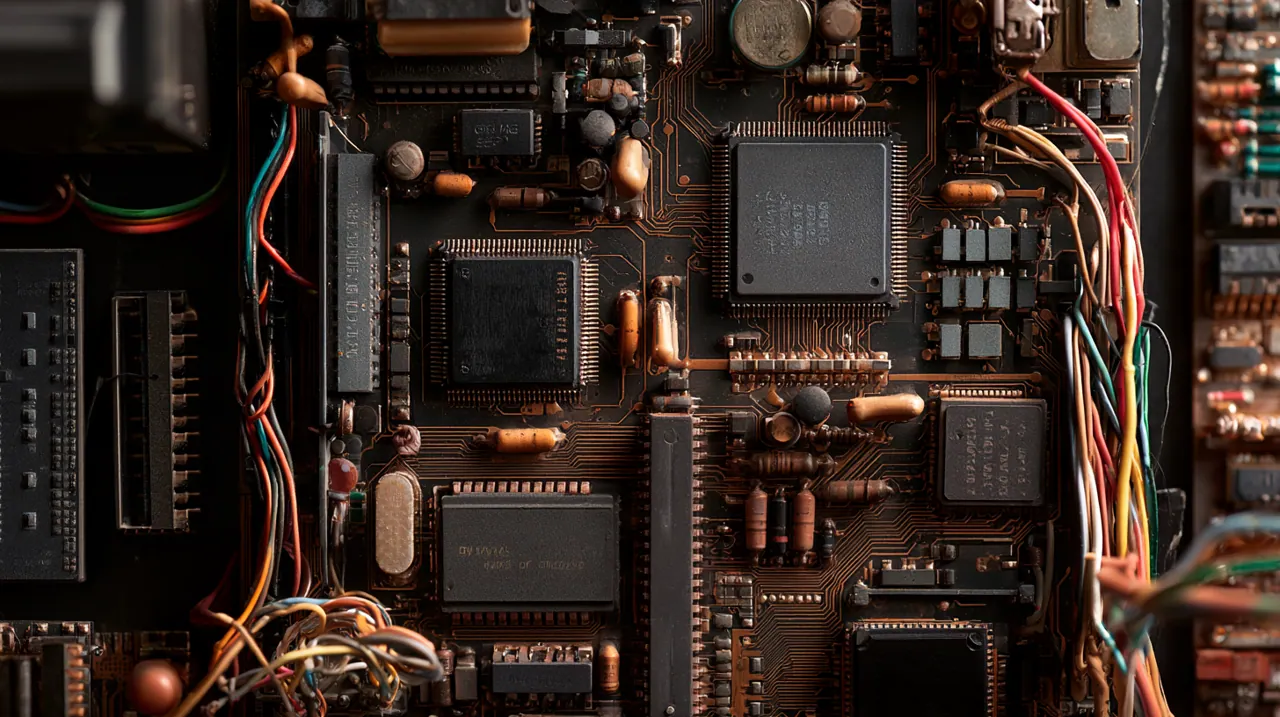
The early 1980s witnessed a vibrant explosion in home computing, transforming what was once a niche hobby into a mainstream phenomenon. At the heart of this revolution, particularly in the realm of gaming, stood two titans: the Commodore 64 and the Sinclair ZX Spectrum. Though released in the same year, 1982, these 8-bit machines fostered distinct cultures and battled for market dominance across different regions, shaping the nascent video game industry in profound ways.
Architectural Philosophies and Technical Prowess
The core differences between the Commodore 64 and the ZX Spectrum began at their very design. The C64, often described as a "games machine disguised as a computer," featured a MOS Technology 6510 CPU, a variant of the venerable 6502. Its true strength lay in its dedicated custom chips: the VIC-II (Video Interface Controller) and the SID (Sound Interface Device). The VIC-II provided advanced graphics capabilities for its time, including hardware sprites, smooth scrolling, and a palette of 16 colors, allowing for impressive visual effects directly supported by the hardware.
In contrast, the ZX Spectrum, a product of British ingenuity, was built around the Zilog Z80 processor. Its graphics were handled primarily by a custom Uncommitted Logic Array (ULA). This design was more cost-effective but placed a greater burden on the CPU for graphics manipulation. The Spectrum offered a palette of 8 colors, each with two levels of brightness, but famously suffered from "attribute clash"—where a single 8x8 pixel block could only contain two colors (foreground and background), leading to visual compromises when sprites moved across different colored backgrounds.
Memory configurations also varied. The Commodore 64 lived up to its name with a standard 64KB of RAM. The ZX Spectrum initially launched with 16KB and 48KB models, with a later 128KB model expanding its capabilities. While the C64's dedicated hardware often made programming certain visual effects easier, the Spectrum's more direct memory access and efficient Z80 often allowed for surprisingly fast and complex game logic, despite its graphical limitations.
Audio Landscapes: SID vs. Beeper
Perhaps no feature highlighted the divergent design philosophies more starkly than their audio capabilities. The Commodore 64's SID chip is legendary. It was a true synthesizer on a chip, offering three independent voices, each capable of generating various waveforms (sawtooth, triangle, pulse, noise), with sophisticated ADSR (Attack, Decay, Sustain, Release) envelopes and filter capabilities. This allowed for incredibly rich, multi-layered music and sound effects that rivaled arcade machines of the era, creating a distinct sonic identity for C64 games.
The ZX Spectrum, by comparison, was equipped with a simple one-bit beeper. This humble component was capable of producing only a single tone at a time. However, the ingenuity of Spectrum developers turned this limitation into an art form. Through rapid toggling of the beeper and clever programming, they managed to create surprisingly melodic tunes and recognizable sound effects, often pushing the boundaries of what seemed possible with such basic hardware. While not as sonically grand as the SID, the Spectrum's beeper sound became an iconic part of its charm.
Market History and Regional Pricing
The battle for market share was often a tale of two continents. The Commodore 64 achieved immense success in North America and parts of Europe, particularly Germany. Its initial price point in the US was around $595, but aggressive marketing, including bundling deals and frequent price
READ THE HISTORY.
PLAY THE FUTURE.
Free retro-inspired games from Pause Play Games.
▶ PLAY FREE GAMES