The SID Chip: Why Commodore 64 Music Still Matters
In the annals of computing history, few components command the reverence and affection of the Commodore 64's Sound Interface Device, affectionately.
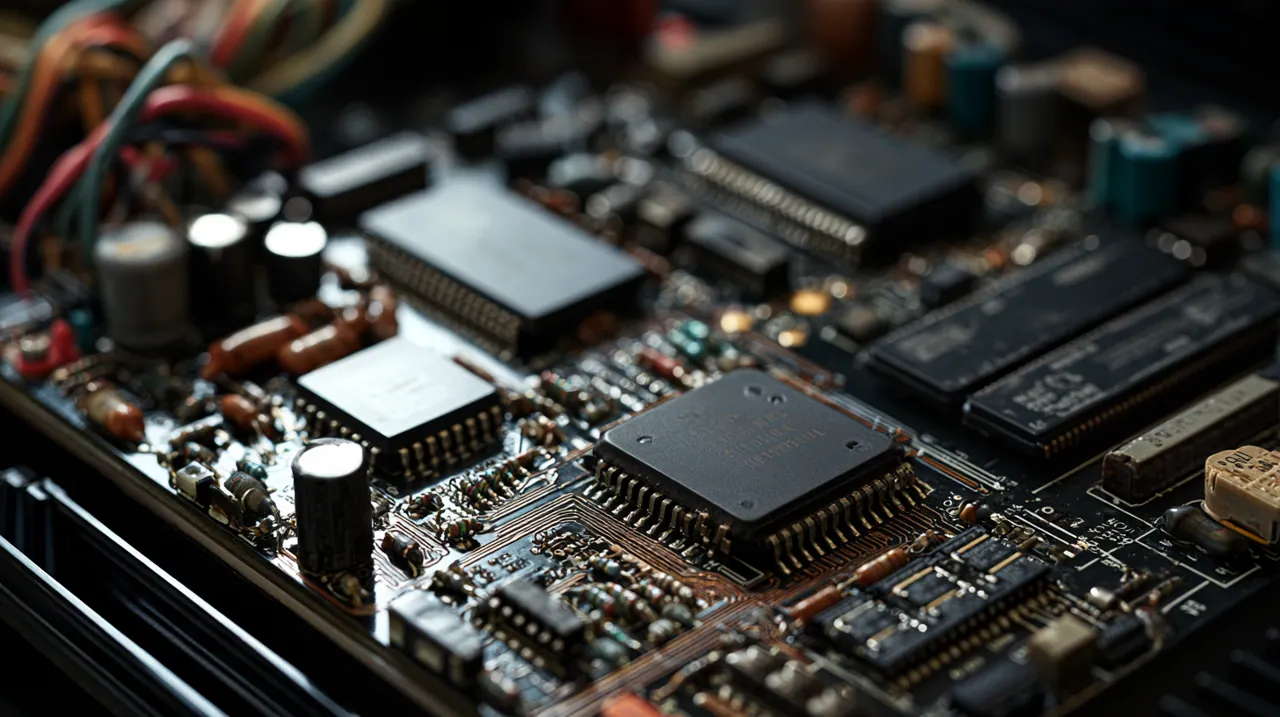
In the annals of computing history, few components command the reverence and affection of the Commodore 64's Sound Interface Device, affectionately known as the SID chip. Launched in 1982, the C64 became the best-selling single computer model of all time, and a significant portion of its enduring legacy can be attributed to the revolutionary sound capabilities provided by the SID. More than just a chip, the SID was an instrument, shaping a generation's perception of digital music and laying groundwork for genres to come. Even decades later, its distinctive sound continues to captivate and inspire.
The Architecture of Sound: SID Synthesis Explained
Unlike many contemporary sound chips that relied on simple tone generators or noise channels, the MOS Technology 6581 (and later 8580) SID chip was a true synthesizer. It featured three independent voices, each capable of generating a range of waveforms: triangle, sawtooth, variable pulse, and noise. This allowed for a surprising palette of sounds, from rich basses to sharp leads and percussive effects.
Crucially, each voice also incorporated its own Attack, Decay, Sustain, Release (ADSR) envelope generator. This enabled dynamic control over a sound's amplitude, mimicking the natural decay of real-world instruments or creating evolving sonic textures. Composers could program how quickly a sound reached its peak volume (Attack), how it faded to a sustained level (Decay), how long it held that level (Sustain), and how it finally faded out after a key release (Release). This level of control was unprecedented in home computers of its era.
The Filter: SID's Sonic Signature
Perhaps the most defining feature of the SID chip, and a key differentiator from its peers, was its integrated multi-mode resonant filter. This allowed for real-time manipulation of a sound's timbre, enabling low-pass, band-pass, and high-pass filtering. A low-pass filter, for example, could soften a harsh sound by removing high frequencies, while a high-pass filter could thin it out by removing low frequencies. The filter's resonance control further enhanced its expressive power, creating iconic "wah" effects or emphasizing specific frequency ranges.
The combination of versatile waveforms, individual ADSR envelopes, and a powerful resonant filter gave the SID an almost analog-synthesizer quality. It moved beyond simple beeps and boops, offering a depth of sound design that fueled immense creativity among early video game composers and the burgeoning demoscene.
Constraints and Creativity: Pushing the Limits
Despite its advanced capabilities, the SID chip operated within the technical constraints of its time. The most significant limitation was its mere three voices. For composers accustomed to orchestral arrangements or multi-instrument bands, this presented a considerable challenge. Furthermore, managing the SID's registers and updating its parameters consumed valuable CPU cycles from the C64's 6510 processor, meaning complex sound routines could impact game performance.
Yet, these constraints often fostered ingenious solutions. Composers developed sophisticated programming techniques to create the illusion of more voices or greater complexity. These included:
- Fast Arpeggiation: Rapidly cycling through notes on a single voice to simulate a chord.
- Voice Stealing: Dynamically reassigning voices to the most important sounds, dropping less critical ones.
- Software-controlled Envelopes: Writing custom envelope routines to bypass or augment the hardware ADSR, creating more elaborate sound shapes.
- Filter Sweeps: Continuously modulating the filter's cutoff frequency to add movement and expression to a sound.
The result was a unique compositional style, often characterized by intricate melodies, driving basslines, and innovative percussive elements, all woven together within the three-voice limit. Pioneers like Rob Hubbard, Martin Galway, and Ben Daglish crafted soundtracks that are still celebrated today for their musicality and technical prowess.
Evolving Sounds: The 6581 and 8580 Revisions
It is a common misconception that all SID chips sound identical. Over its production run, the Commodore 64 featured two primary revisions of the SID chip: the MOS 6581 and the MOS 8580. While functionally similar, they possessed distinct sonic characteristics, largely due to differences in their manufacturing processes and operating voltages.
- MOS 6581 (Early C64s): This was the original SID chip, typically found in earlier "breadbin" C64 models. It operated on a 12-volt power supply. The 6581's filter is often described as having a "grittier," "warmer," or "more aggressive" sound. It also exhibited some non-linearities and potential for audio distortion, which many composers learned to exploit creatively, contributing to its raw and powerful reputation.
- MOS 8580 (Later C64s, C64C, C128): Introduced in later C64 models and the C128, the 8580 operated on a lower 9-volt power supply. This revision generally produced a "cleaner," "smoother," and less prone to distortion sound, particularly in its filter section. While some purists preferred the raw character of the 6581, the 8580 offered a more faithful and consistent filter response.
These differences meant that a piece of music could sound subtly, or even significantly, different depending on which SID chip was present in the Commodore 64 it was played on. This nuance is a testament to the analog-like nature of the SID's design and is a key point of discussion among enthusiasts.
A Lasting Legacy: From Games to Chiptune
The SID chip's influence extends far beyond the lifespan of the Commodore 64. Its unique sound became synonymous with the golden age of 8-bit gaming, embedding itself in the cultural consciousness of millions. The demoscene, a subculture focused on creating impressive audio-visual programs, continuously pushed the SID's capabilities, producing complex and avant-garde musical pieces.
Today, the SID chip is celebrated as a foundational element of electronic music. Its characteristic sounds have inspired the chiptune genre, where artists compose new music using the limitations and sonic palette of vintage sound chips. Modern synthesizers and software plugins often emulate the SID, attempting to capture its distinct character. The chip's legacy is a testament to imaginative engineering and the boundless creativity it enabled, proving that even with limited resources, truly iconic sounds can be forged.
READ THE HISTORY.
PLAY THE FUTURE.
Free retro-inspired games from Pause Play Games.
▶ PLAY FREE GAMES